
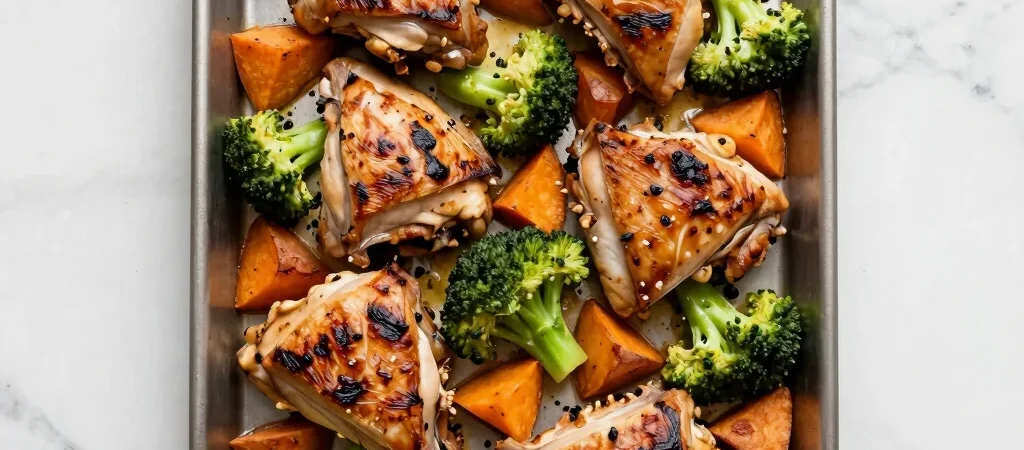
Cooking protein and vegetables on a single tray is a prime strategy for effortless weeknight dinners. However, dumping everything onto a rimmed pan often leaves you with steamed, waterlogged ingredients rather than caramelized roasted edges. These tested rules ensure every element on your sheet pan cooks evenly and develops rich flavor.
Never Overcrowd the Pan Space
Every vegetable releases moisture as its cell structure breaks down under heat. When items are crammed tightly together, that moisture gets trapped and steams the food instead of letting it roast. Give your chicken, broccoli, and potatoes at least half an inch of breathing room on the pan, or divide the batch across two trays.
Stagger Ingredients by Density
Hard root vegetables like sweet potatoes and carrots take twice as long to roast as soft zucchini or delicate salmon fillets. Start dense vegetables in the oven first for fifteen minutes before adding quick-cooking proteins and tender greens to the tray. Staggering guarantees that nothing turns to mush while waiting for hard vegetables to soften.
Preheat the Sheet Pan Empty
Slide your empty rimmed baking sheet into the oven while it preheats to 400 degrees Fahrenheit. When you drop seasoned vegetables onto the hot metal surface, searing begins immediately on contact, cutting down overall cooking time and preventing soggy bottoms.